
Providing presence
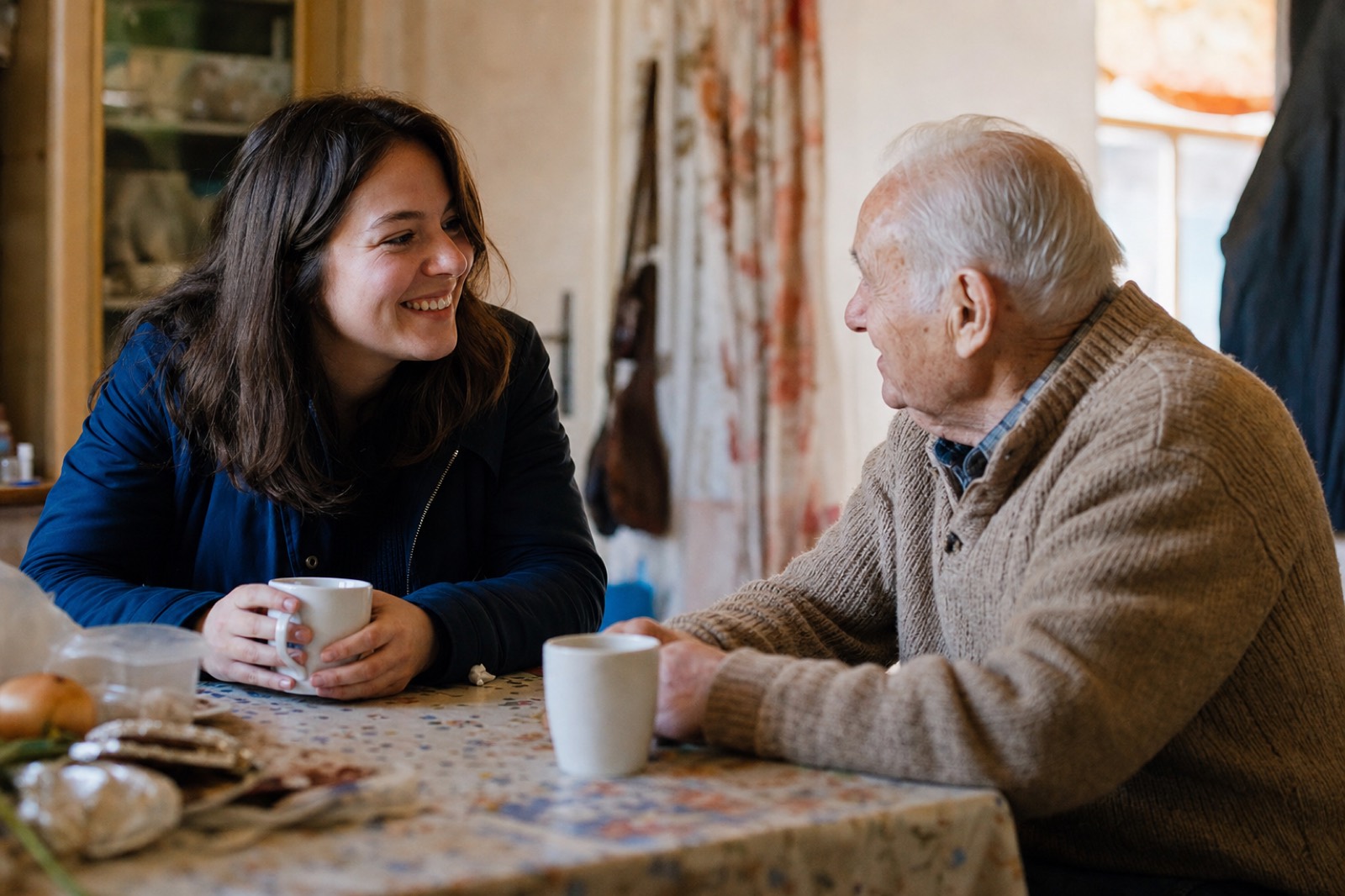
Talking with our elders and listening to them, to restore the bond with others when no one else is there.
A lasting relationship of trust
Offering presence means building lasting relationships of trust with older people experiencing isolation, where they live — in towns and in remote rural areas alike. Our volunteers visit regularly, call, listen and accompany.
For many elders, these moments are the only social contact of the week. They restore the feeling of existing, of being listened to, and of being part of the world.
In practice, we offer:
- Regular home visits
- Telephone support and a caring, listening ear
- Presence for people who are ill or at the end of life
- Trusted support, at each person's own pace
Why presence matters so much
Isolation is not a minor inconvenience. For an older person, weeks can pass without a single real conversation — and that silence slowly erodes health, confidence and the will to keep going.
In France, social isolation among older people has grown steadily over the past decade. Many seniors lose their spouse, see their friends pass away, and watch their children move to other regions. Reduced mobility, hearing loss or a small pension can then turn an ordinary week into a long stretch of solitude.
Research consistently links prolonged loneliness to faster cognitive decline, depression, poorer nutrition and earlier loss of independence. A regular, friendly presence is one of the simplest and most effective answers — it costs little, yet it changes everything for the person who receives it.
Indicative figures drawn from public studies on the isolation of older people in France; they describe the reality we meet in the field.

How a DPI visit actually works
We take time to build trust. There is never any pressure — only a steady, reliable presence the person can count on.
- A first introductionA coordinator meets the older person (often referred by a relative, neighbour, doctor or social worker) to understand their wishes, habits and boundaries.
- A carefully matched volunteerWe pair each elder with a trained volunteer chosen for shared interests and availability, so the relationship can last.
- Regular, dependable visitsVisits and phone calls follow a rhythm agreed with the person — usually weekly — so the bond becomes a fixed, reassuring point in their week.
- Watchful, caring follow-upVolunteers stay alert to changes in health or mood and, with consent, alert our team or the family so help arrives early.
In their own words
Since Madame arrives every Thursday, I look at the clock differently. I have something to wait for again — and someone to tell my stories to.
I give two hours a week. In return I have gained a friendship and a hundred stories about a Reims that no longer exists. I get far more than I give.
My father lives 400 km away from me. Knowing that a DPI volunteer checks in on him each week lets me breathe. They noticed his fall before I ever could have.
Common questions about visits
Who can request a visit?
An isolated older person can ask for themselves, or a relative, neighbour, carer or social worker can get in touch on their behalf. We then arrange a first meeting to make sure our support fits their wishes.
Does it cost anything?
No. Our presence and listening support are completely free. DPI is a non-profit association funded by donations; we never ask the people we support for payment.
Are the volunteers trained?
Yes. Volunteers receive guidance on listening, confidentiality, the boundaries of their role, and how to recognise warning signs. They are accompanied by a coordinator throughout.